
Why Timely Resurfacing is a Regulatory Necessity
The structural integrity of commercial paved surfaces represents a foundational element of public safety, risk management, and regulatory compliance. Across commercial real estate, industrial facilities, and municipal properties, vehicular surfaces undergo relentless environmental exposure and heavy traffic loads every single day. When asphalt assets begin to show early signs of degradation, property managers and asset directors face a critical choice between early intervention and deferred maintenance. Ignoring localized distress rarely saves capital; instead, unaddressed wear rapidly expands through subterranean base layers, leading to structural failures that require extensive remediation. Engaging certified professionals for timely parking lot paving ensures that facilities maintain operational continuity, protect public safety, and uphold the professional standard demanded by modern commercial enterprises.
Beyond basic functionality, maintaining pristine asphalt surfaces directly intersects with legal mandates and risk mitigation strategies. Property owners operate under strict duties of care to provide safe environments for tenants, patrons, delivery fleets, and pedestrians. Pavement deterioration manifests as trip hazards, uneven grades, standing water pools, and faded vehicular directional markings, each of which dramatically elevates corporate liability exposure.
Enhancing Safety Standards and Regulatory Compliance
Maintaining physical surfaces in high-traffic commercial environments directly influences baseline site safety. When pavement begins to deteriorate, hairline fissures quickly evolve into deep depressions and hazardous potholes due to freeze-thaw cycles and heavy vehicular point loads. These surface defects represent immediate trip-and-fall hazards for pedestrians walking between vehicles and building entrances. In addition, deteriorated pavement causes vehicles to lose traction during adverse weather conditions, increasing the likelihood of low-speed collisions and structural damage to curbs, light poles, and signage. Routine investment in professional parking lot paving establishes a uniform, high-traction driving plane that keeps vehicular traffic orderly, protects visiting pedestrians, and minimizes premise liability claims before insurance underwriters intervene.
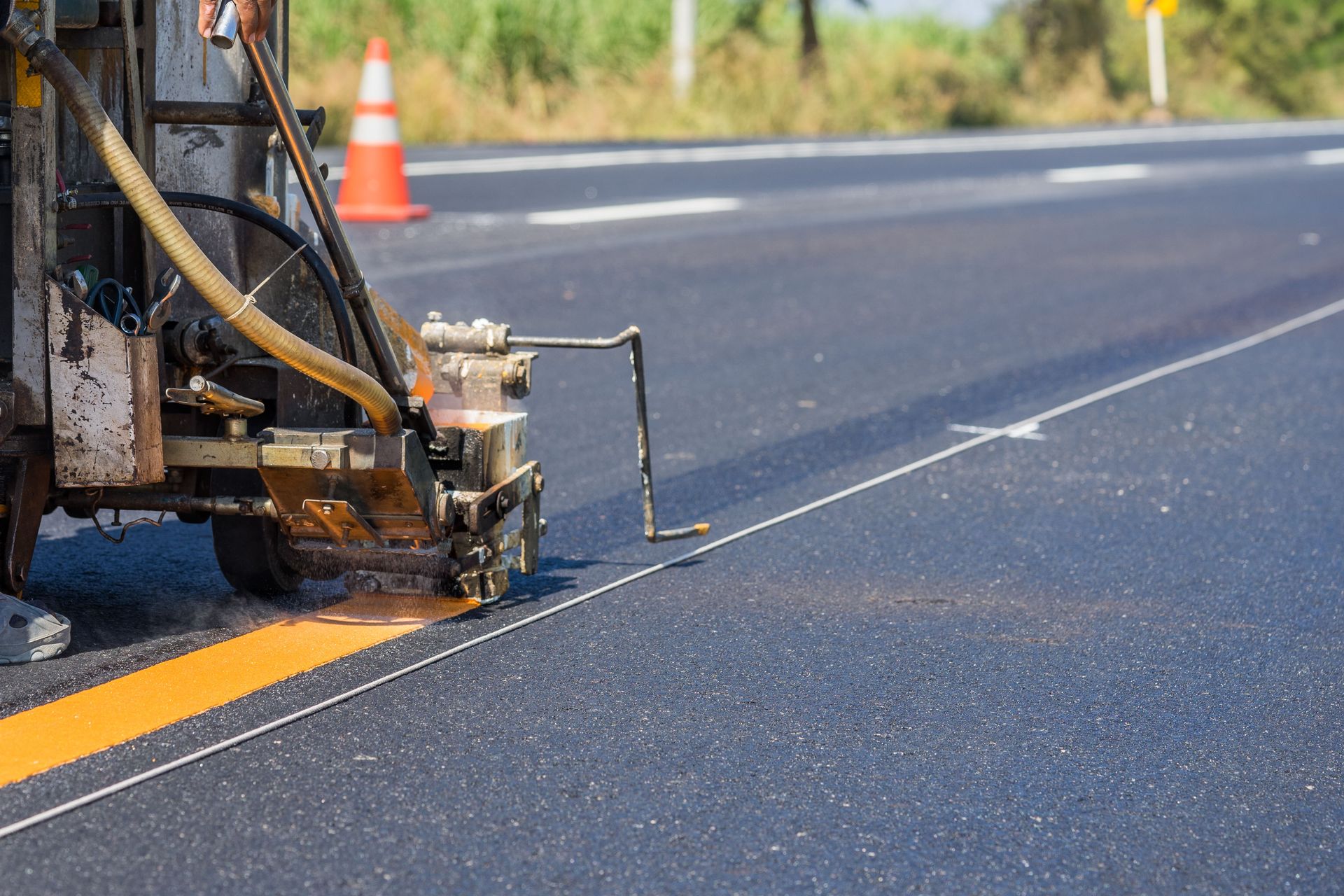
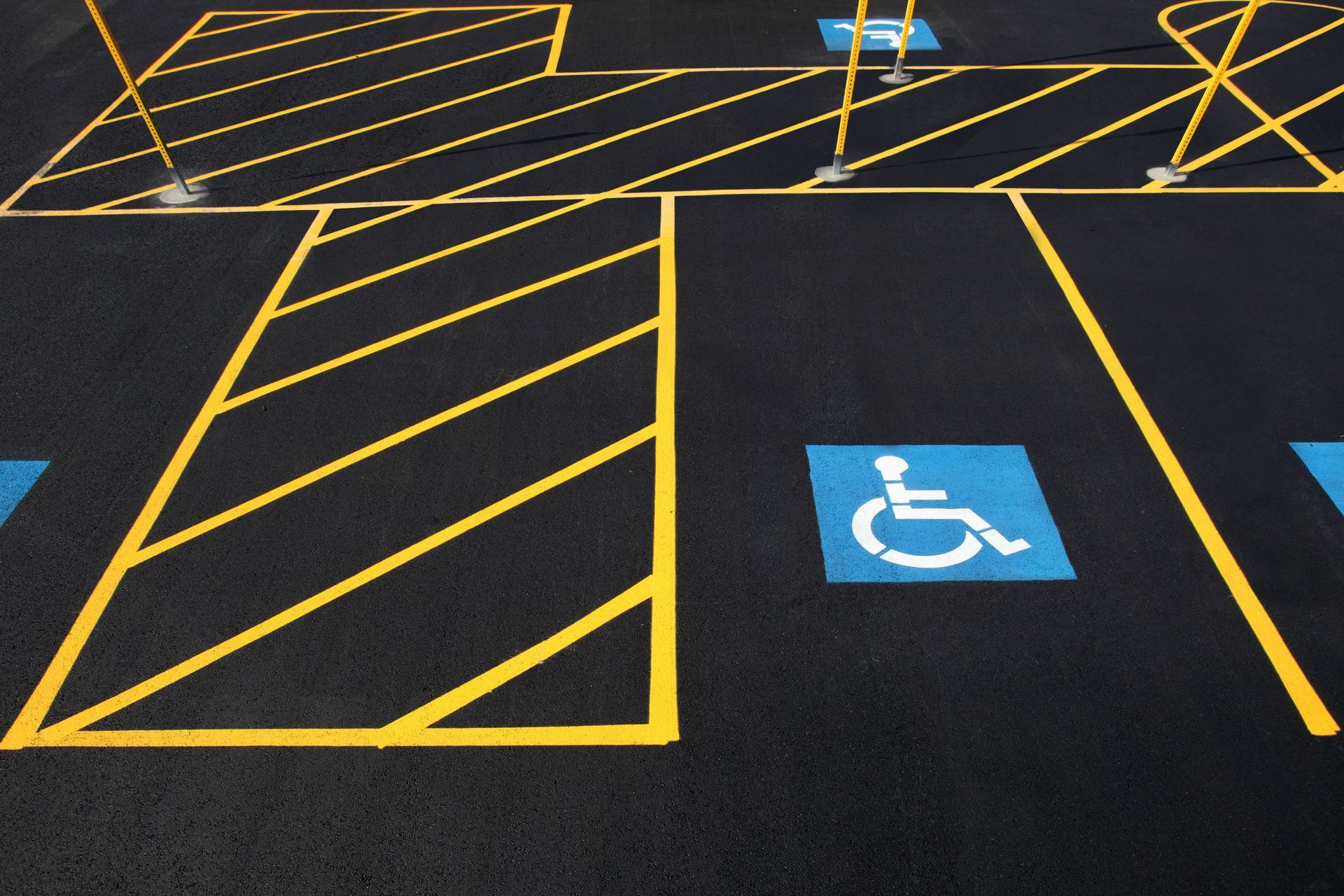
Regulatory compliance extends far beyond surface smoothness, incorporating federal, state, and municipal mandates that govern public accommodations. The Americans with Disabilities Act establishes rigorous geometric parameters for accessible pathways, parking stalls, slope gradients, and transition ramps. As asphalt ages, sub-base compaction and surface shifting can subtly distort cross-slopes and access routes, causing previously compliant facilities to fall out of legal alignment. Furthermore, local fire marshals require clear, unobstructed fire lanes with durable markings to guarantee unimpeded emergency vehicle access at all times.
Preserving Structural Integrity and Asset Longevity
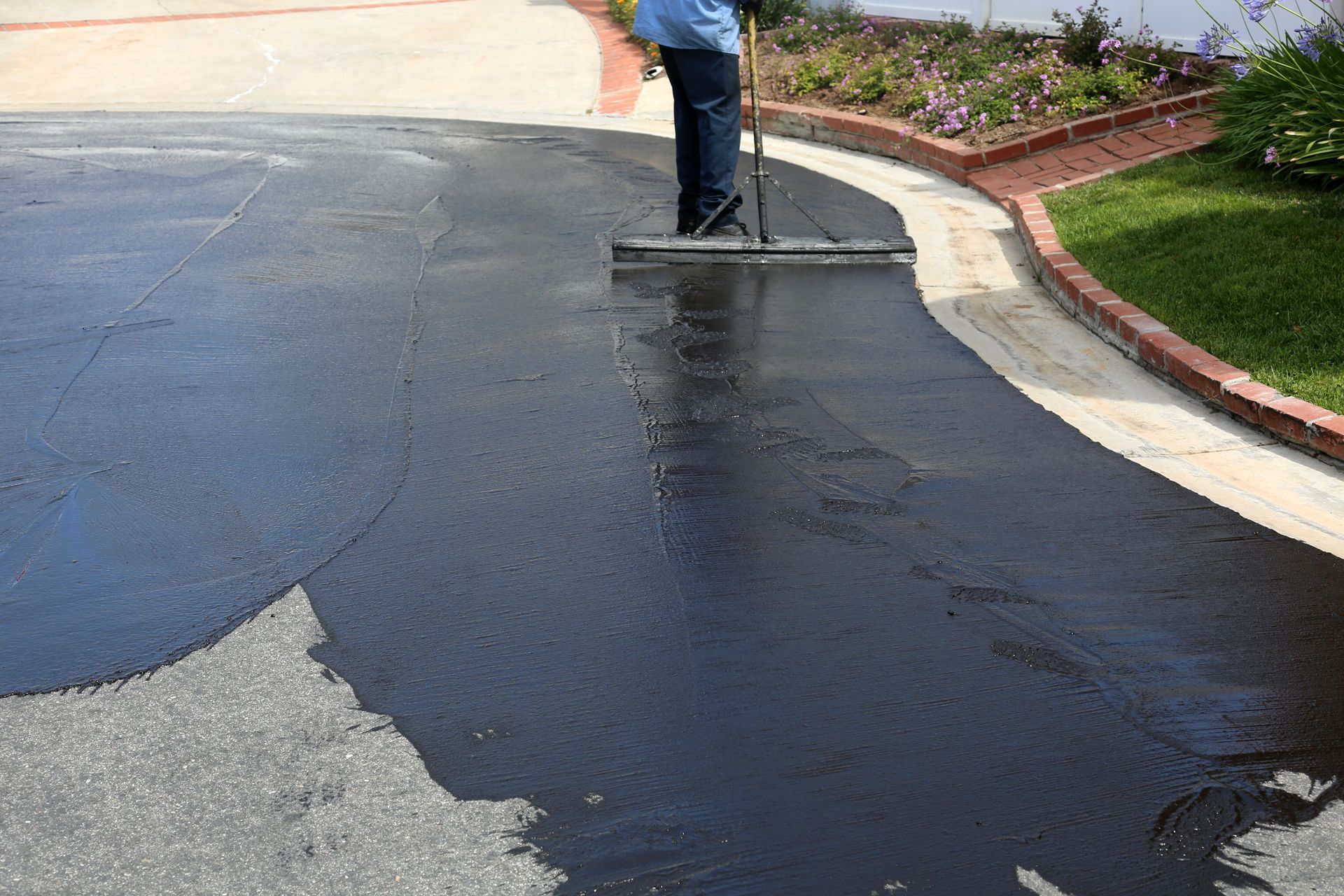
Every asphalt surface relies on a carefully engineered relationship between its underlying aggregate base and its protective surface course. When the surface layer weathers and oxidizes under ultraviolet radiation, it loses its bitumen flexibility and becomes brittle, allowing moisture penetration into lower structural layers. Unchecked moisture softens the base material, causing localized load failures that manifest as alligator cracking and deep structural rutting. Regular resurfacing not only addresses such issues but also reinforces the surface, adding protective layers to withstand weather and wear. According to Home Advisor, an asphalt parking lot should be resurfaced every 15 to 20 years to ensure the parking lot remains durable and compliant with regulations. This proactive approach not only maintains the quality of the infrastructure but also maximizes the return on investment for public and private stakeholders.
To achieve this level of durability, commercial property managers must avoid relying on temporary patch jobs that fail to address subterranean moisture problems. Executing comprehensive parking lot paving at predetermined points in an asset life cycle arrests the progression of water damage, seals off the compacted aggregate base, and restores structural load capacity across the entire site. Commercial asphalt mixes incorporate specialized binder formulations engineered to flex under heavy axle weights without fracturing. By scheduling structured resurfacing interventions with seasoned asphalt technicians, commercial facility operators preserve the deep investment made in their initial ground preparation, effectively doubling the usable service life of their exterior physical plant.
Mitigating Financial Liabilities and Long-Term Capital Expenditures
The financial case for structured, proactive pavement maintenance is grounded in predictable life cycle costing models. Deferring needed resurfacing projects often appears to yield short-term budget savings, but it consistently leads to catastrophic exponential cost escalation later. When superficial wear is neglected until sub-base failure occurs, simple mill-and-overlay solutions are no longer viable, leaving full-depth excavation and complete reconstruction as the only remaining remedies. Industry data consistently confirms that reactive infrastructure repairs cost three to four times more than scheduled capital renewals. Commercial facilities that allocate planned reserves for timely parking lot paving stabilize their operational balance sheets and systematically avoid sudden, disruptive capital calls caused by emergency structural failures.
In addition to direct material and construction expenses, unmaintained pavement generates significant indirect financial drains that sap enterprise profitability. Deteriorated driving lanes cause vehicle alignment damage, popped tires, and pedestrian injuries, all of which culminate in costly administrative inquiries, legal claims, and rising general liability insurance premiums.
Modernizing Infrastructure Through Technological and Material Innovations
The asphalt paving sector has evolved far beyond traditional aggregate laying through the rapid adoption of sophisticated material science. Contemporary commercial installations now routinely integrate polymer-modified asphalt binders, recycled asphalt pavement mixtures, and geosynthetic reinforcing fabrics that dramatically improve tensile performance. Polymer additives allow asphalt to flex under severe thermal shifts, resisting brittle cracking during sub-zero winters while preventing rutting under scorching summer sun. Employing advanced mixes in commercial parking lot paving delivers an exceptionally resilient surface layer that resists chemical degradation from automotive fuels, motor oil leaks, and winter deicing salts, thereby raising the operational standard for modern commercial campuses.
Simultaneously, engineering technology has revolutionized the assessment, design, and execution phases of commercial resurfacing projects. Paving contractors employ high-resolution laser profilometers, ground-penetrating radar, and thermal scanning to evaluate subsurface compaction, detect hidden moisture pockets, and map precise asphalt thickness before applying new materials. During installation, automated paver screeds equipped with digital slope controls ensure uniform compaction, optimal grade falls, and flawless drainage slopes that prevent water ponding around building foundations.
Elevating Commercial Value and Operational Environmental Performance
The exterior presentation of a commercial property establishes the initial benchmark for its tenant satisfaction and broader community standing. A crumbling, pothole-riddled exterior conveys neglect, repelling high-value commercial tenants, discouraging retail shoppers, and depressing tenant lease rates across the asset. Conversely, an impeccably maintained exterior featuring smooth asphalt, sharp striping, and clean curbs enhances curb appeal, reinforces property valuation appraisals, and projects institutional professionalism. Investing in scheduled parking lot paving signals to corporate tenants, prospective buyers, and site visitors that the facility is managed with precision, diligence, and unwavering attention to operational detail.
Modern asphalt management also aligns directly with modern corporate environmental stewardship and municipal stormwater mandates. Advanced porous and permeable asphalt solutions enable rainwater infiltration, reducing runoff volumes directed into strained municipal storm sewer systems and filtering out surface pollutants naturally. Furthermore, the modern paving industry operates as one of the world's leading recyclers, actively reclaiming and reprocessing existing asphalt millings into fresh base courses to reduce aggregate quarrying and energy usage. Embracing environmentally conscious resurfacing techniques fulfills municipal sustainability mandates while advancing corporate social responsibility commitments, demonstrating that high-performance civil engineering and progressive environmental stewardship can operate in complete synergy.
Securing Professional Partnerships and Regulatory Certification
Establishing a safe, fully compliant exterior environment requires ongoing technical rigor, structured capital forecasting, and certified engineering execution. Pavement assets cannot simply be evaluated from behind an office desk; they require detailed geotechnical assessments, slope verification, drainage mapping, and strict adherence to regional transportation codes. When facility owners partner with established commercial paving contractors, they replace speculative maintenance assumptions with certified asphalt engineering methodologies. Ensuring that your facility engages in proactive, code-compliant
parking lot paving shields your enterprise from punitive non-compliance citations, preserves your physical plant, and safeguards the thousands of vehicles and visitors who enter your property every single week.
To guarantee that your facility assets meet every regional safety mandate while safeguarding long-term capital value, consult with the experienced engineering team at Advance Paving Co. INC. Contact us today to schedule a comprehensive physical site evaluation and secure a turnkey resurfacing plan that guarantees regulatory compliance, uncompromised structural integrity, and maximum return on your commercial investment.


Share On: